- Good
- Adequate
- Marginal
- Weak
- Poor
Frontal Offset Deformable Barrier
Lateral Impact
Whiplash Rear Impact
Comment
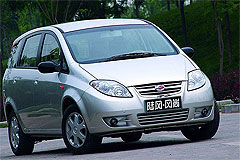
Inspection of the vehicle after the frontal impact, and examination of its performance during the test itself, revealed that structures surrounding the passenger compartment were at the limit of their load-bearing capacity. As a result, the passenger compartment was deemed to be unstable as an impact at a higher speed was expected to lead to significantly greater collapse. Protection of the driver's chest was rated as marginal. Dummy readings indicated good protection of the front seat occupants' knees and femurs. However, structures in the dashboard presented a risk of injury to occupants of different sizes and to those sat in different positions, and protection was rated as marginal. The steering rack was pushed rearwards during the frontal test, heavily distorting the driver's footwell and tearing the metal. This represented a risk of injury to the driver's feet and ankles and the car was penalised. The CV9 has no side protection airbags and, in the side barrier test, protection of the chest area was rated as weak and that of the abdomen as marginal. In that test, three doors were seen to have opened during the impact. Landwind have attributed this to weak springs in the door latches and intend to fit stiffer springs to try to overcome the problem in future vehicles. As the car has no head protection device, no side pole test was performed. The seats supplied for whiplash tests were not consistent with the ones in the test vehicles. As the seats in the test cars were damaged from the full scale tests, no valid assessment could be made of the whiplash protection offered by the CV9.




 Rating Expired


